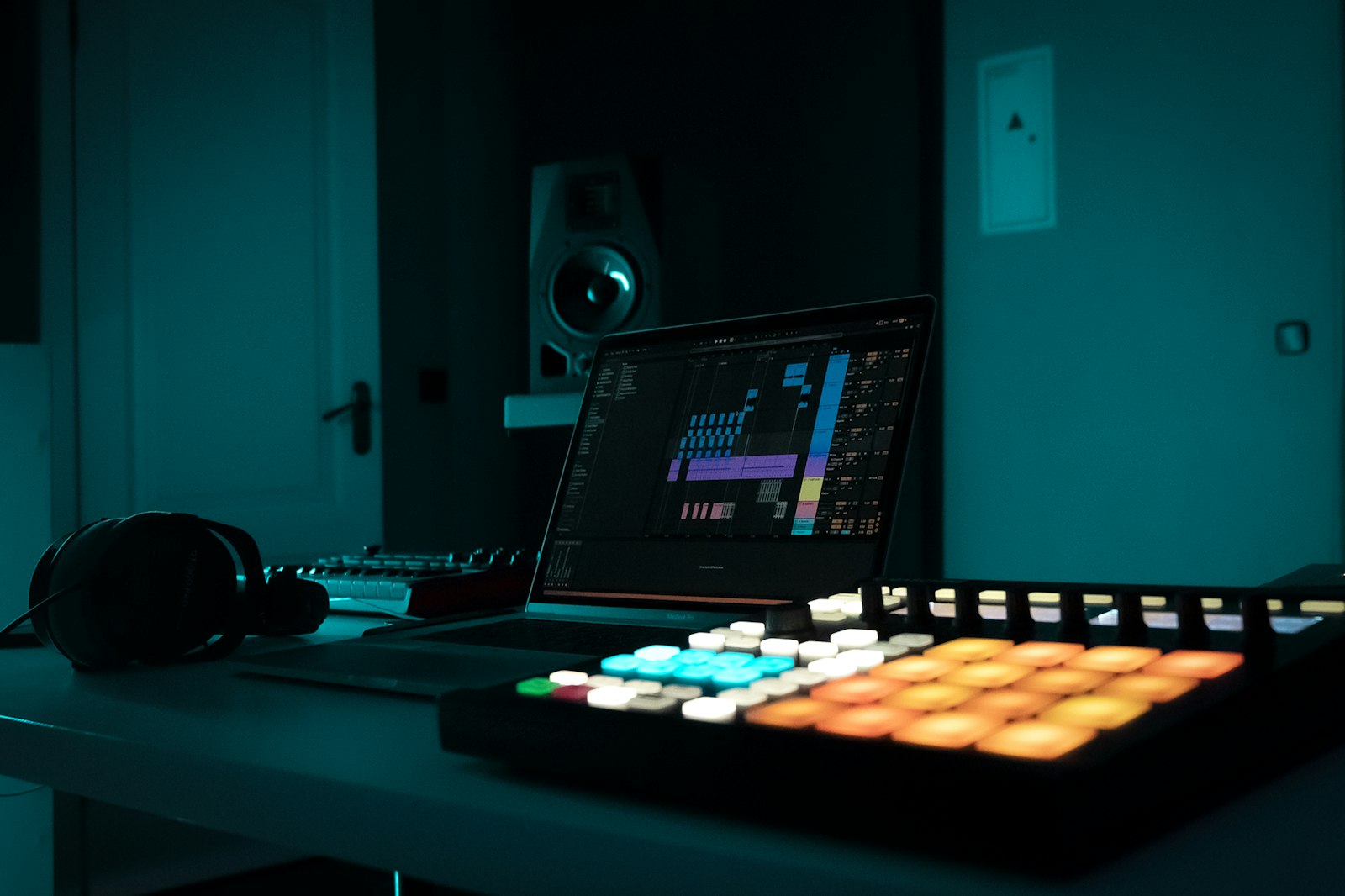
You finally save up, drop a few hundred bucks on the plugin bundle everyone swears by, load it onto your mix, and... it sounds basically the same. Maybe slightly shinier garbage. The nagging suspicion creeps in: was it ever the gear?
The short answer: No. A skilled engineer working entirely with the stock plugins in their DAW will out-mix a beginner with a $10,000 plugin folder every single time. Spend your money on monitoring and room treatment long before you touch a boutique compressor.
Why stock plugins are genuinely enough
The EQ, compressor, reverb, and limiter that shipped free with your DAW are clean, accurate, and fully capable of a commercial release.
Logic's Channel EQ, Ableton's EQ Eight, Pro Tools' stock dynamics, Reaper's ReaPlugs, Studio One's Fat Channel strip — these are not toys. A surgical digital EQ that does exactly what you tell it is, in many cases, more useful than a vintage-modeled one that colors everything whether you asked it to or not.
The moves that make a mix sound professional are boring and universal:
- High-pass everything that isn't bass or kick, sweeping up from 20 Hz until it stops sounding full — usually 80–120 Hz on most elements.
- Subtractive EQ to carve mud around 200–500 Hz and harshness around 2–5 kHz before boosting anything.
- Intentional compression: a vocal at roughly 3:1 to 4:1, attack around 10–30 ms so transients breathe, release timed to the tempo, pulling 3–6 dB of gain reduction.
- Bus and parallel processing for glue, and a limiter at the end targeting −9 to −14 LUFS integrated depending on genre.
None of that requires a single paid plugin. The decisions are the product. The plugin is just the screwdriver.
Where your money should actually go
Most people get the priority order exactly backwards.
- Monitoring. Honest monitors or headphones, and the discipline to know how they translate. You cannot fix what you cannot hear.
- Room treatment. Bass traps in the corners and absorption panels at your first reflection points will change your mixes more than any plugin on the market. An untreated room lies to you about the low end on every song.
- Skill. Ear training, a referencing habit, and reps. Free, and the highest-leverage investment you can make.
- Then, maybe, a plugin or two that does something your stock tools genuinely cannot.
A room that hides a 6 dB bump at 80 Hz will sabotage a mix faster than the cheapest EQ ever could. Treatment first. Gear last.
The myth worth killing
The single most expensive belief in audio is that the tool makes the decision.
Buying Pro Tools, the Waves catalog, or a full FabFilter suite does not make your mixes sound professional. The plugin has no idea what your song is supposed to feel like. "Garbage in, garbage out" applies first: a poorly recorded, badly arranged track run through a $300 compressor is still a poorly recorded, badly arranged track. Tools don't make decisions. You do.
I've heard release-ready mixes built entirely in stock Reaper plugins, and amateur disasters built on a five-figure plugin collection. The difference was never the folder. It was the person making choices about balance, arrangement, and what to leave alone.
The other camps
The "stock is all you need" position isn't the whole story. There are legitimate reasons working engineers reach for paid tools.
The character camp. At an advanced level, analog-modeled plugins genuinely add something. A modeled tube preamp, a 1176-style FET compressor, or a tape emulation introduces harmonic distortion and nonlinear behavior that clean digital tools won't replicate. These are real, audible flavors. The key word is flavor, not fix — they make a good mix more characterful; they don't make a bad mix good.
The workflow camp. Some engineers pay for tools purely because they're faster. A dynamic EQ, a well-designed de-esser, or a one-knob console-emulation strip can collapse five stock-plugin moves into one and save real time across a busy session. When you're billing hours, paying for speed is a rational business decision, not a sonic one.
The "one great tool per job" camp. This is the most defensible position. Instead of hoarding forty compressors, these engineers own one or two they know intimately and reach for them on instinct. Mastery of a small toolkit beats a giant library you half-understand. If you're going to spend, this is the smart way: buy deliberately, learn it fully, and stop chasing the next sale.
All three positions are reasonable. None of them contradict the core point. They're upgrades for engineers who already know what they're doing — not entry tickets.
How to actually improve instead of buying things
Here's where to put your next ten hours. None of it costs money.
- Reference constantly. Pull a commercial track in your genre into the session, level-match it, and A/B against your mix every few minutes. Your ears adapt and lie within minutes; the reference resets them.
- Mix at low volume. If the balance works quietly, it works loud. Cranking it flatters everything and hides problems.
- Learn gain staging. Get your levels sane on the way in so nothing clips and your plugins see the signal level they expect. A surprising amount of "my mix sounds amateur" is a gain-staging problem wearing a plugin costume.
- Finish more mixes. Ten finished projects teach you more than one mix polished for a month. Volume of reps is the whole game early on.
The day a paid plugin actually helps you is the day you can name exactly what your stock plugin won't do for the specific sound in front of you. If you can't articulate that gap yet, the plugin isn't the bottleneck — you are, in the best possible way, because that's the part you can train.
Buy the bass traps. Mix quieter. Reference more. The expensive folder can wait until you're good enough that it would actually matter — and by then you'll know precisely which two plugins are worth it.