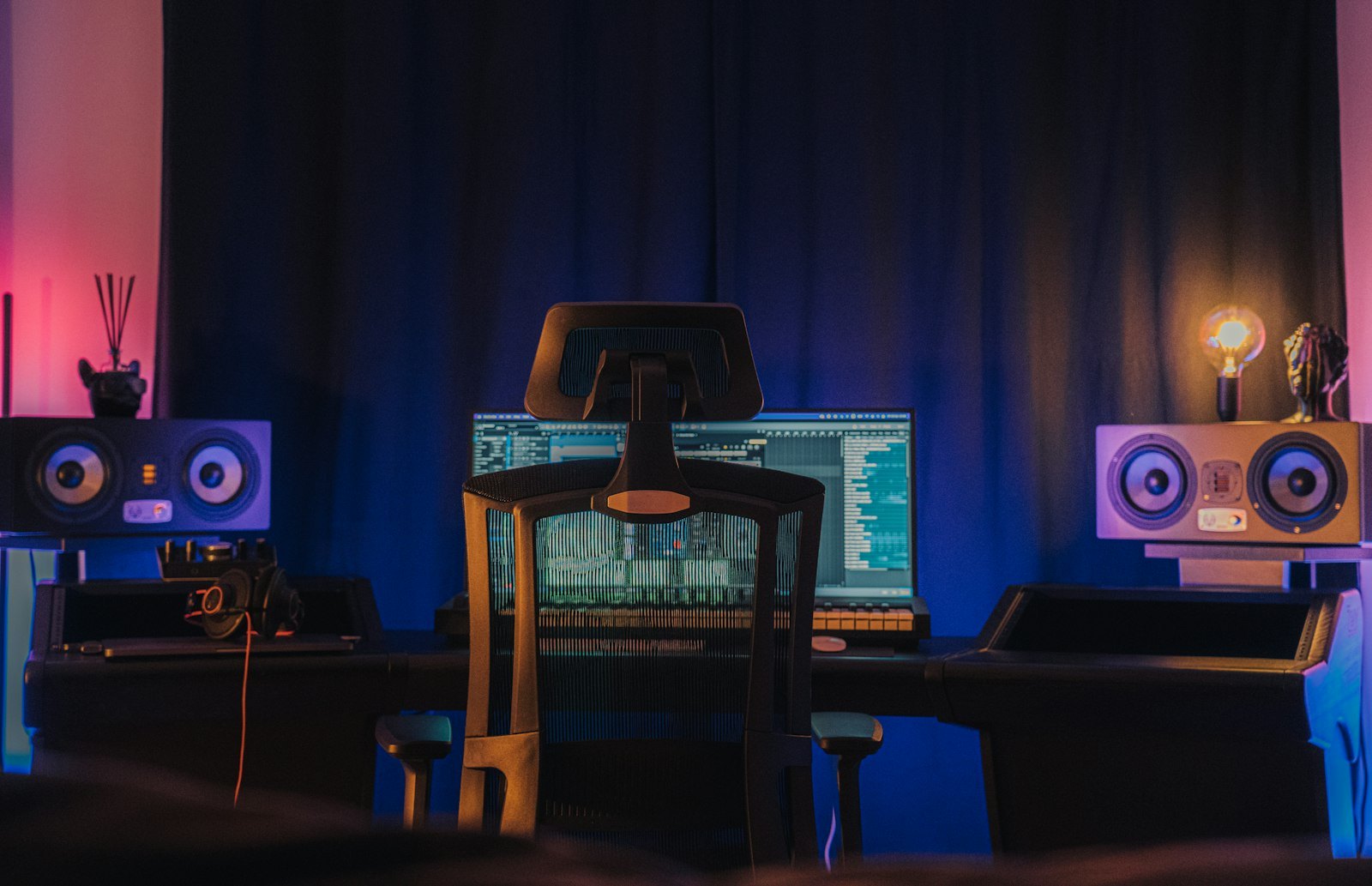
Mixing and mastering get lumped into one mysterious "post-production" black box, and that confusion costs people money. Either they pay for a service they don't understand, or they skip a step their song actually needed.
The short answer: Mixing blends all the individual tracks of one song into a single balanced stereo file; mastering takes that finished stereo and polishes it for loudness, tonal consistency, and translation across your whole release. You can absolutely self-master, but a second set of ears (or at least a different room and a day's distance) catches what you physically cannot.
What mixing actually does
Mixing is the work you do inside the session, with every track still separate. Kick, snare, bass, twelve vocal takes, synths, guitars — all of it lives on its own fader, and your job is to make those elements share one space without fighting each other.
That means balancing levels, carving frequencies so two sounds aren't competing for the same 200 Hz mud, placing elements left-to-right in the stereo field, and building depth with reverb and delay. You're also managing dynamics with compression and automation so the chorus hits harder than the verse without the whole thing falling apart.
A mix is hundreds of small decisions across dozens of channels. When you bounce it down, those tracks collapse into a single stereo file — and that file is what mastering receives.

What mastering actually does
Mastering starts where mixing ends: one stereo file, no access to individual tracks. The mastering engineer can't turn the vocal up. They're shaping the song as a finished object.
The job is threefold: tonal balance across the full program with broad, gentle EQ moves; controlled loudness and dynamics via a limiter (and often a light touch of compression before it); and consistency across an entire release so track three doesn't sound dull and quiet beside track four.
Here's where most people get it wrong:
The myth: mastering is just making the track louder, and a strong mix doesn't really need it. Wrong. Mastering is quality control and translation for the release as a whole. Even a flawless mix benefits from that final objective pass, because the goal isn't volume, it's making the song hold up on earbuds, a laptop speaker, a car, and a club system equally well.
Loudness is a tool in mastering, not the point. The point is that your song survives contact with the real world.
Concrete starting numbers
Vague advice like "just balance it" is useless if you've never done this before. Here are real anchors.
- Loudness target: Aim for around -14 LUFS integrated for Spotify and Apple Music, with a true peak ceiling of -1 dBTP to prevent inter-sample clipping on codecs like AAC and MP3. Harder genres — club, trap, hyperpop — often land between -8 and -10 LUFS integrated, but you're trading dynamic punch for density.
- High-pass everything that isn't bass: Roll off below 80–100 Hz on vocals, guitars, and most synths. Sub-bass build-up turns into mud fast on anything that isn't a subwoofer.
- Vocal compression: A starting point is a 3:1 or 4:1 ratio, attack around 5–10 ms (fast enough to catch peaks without killing transients), release 40–80 ms, aiming for 3–6 dB of gain reduction on the loudest words.
- Mix bus headroom: Leave your mix peaking around -6 dBFS before mastering. A mix that's already slammed to 0 dBFS gives the mastering engineer nothing to work with — the limiter is already on the ceiling.
- Mastering EQ moves: Think 0.5–2 dB shifts, wide Q. If you're pulling 6 dB at mastering, the problem lives in the mix and you need to go back.
That last rule is the real one. Mastering can't fix a bad mix. If the vocal is buried, no limiter saves it.
Where people disagree
There's real consensus on what these processes are, but plenty of legitimate disagreement on who should do them and how. Here are the honest camps.
The dedicated self-master chain. Plenty of producers master their own work with a focused plugin stack — iZotope Ozone, FabFilter Pro-L 2, a solid LUFS meter, and reference tracks. This is genuinely viable for singles and EPs, especially if you've trained your ears and you reference against commercial releases in your genre. The catch is objectivity: you mixed it, so you're already biased.
AI and assisted services. LANDR, eMastered, and Ozone's Master Assistant deliver a fast, cheap, surprisingly competent master in minutes. For demos and tight deadlines they're useful. They struggle with unusual arrangements and genre-bending material, and they can't explain why something sounds off — which is where a human still wins.
The hybrid approach. Mix it yourself, send it out for mastering. This is what I recommend to most serious independent artists. You keep full creative control over the mix, and you buy fresh ears plus a treated room for the final pass. The cost of a single mastering session is small next to the value of catching a problem you've gone deaf to.
None of these is wrong. They trade money for objectivity in different proportions, and the right choice depends on the stakes of the release.
Can you do your own?
Yes, with caveats. Self-mixing is normal and expected — almost every bedroom producer mixes their own material, and that's how you build ears. Self-mastering is harder, not because the moves are technically complicated, but because the hardest part is hearing accurately after eight hours on the same song in your untreated room.
If you're going to self-master, protect yourself from your own ears:
- Sleep on it. Master the next day, never right after the mix session ends.
- Reference relentlessly. Pull two or three commercial tracks in your genre, loudness-match them to your export, and A/B constantly. Your gut will lie; the comparison won't.
- Check on three systems minimum. Headphones, phone speaker, car stereo. If it translates on all three, you're close.
- Trust the meters when your ears are fatigued. LUFS and true-peak readings don't get tired. You do.
The single biggest upgrade to a self-mastered track isn't a better limiter. It's distance and a second opinion.
The line that actually matters
Mixing is creative and internal: you're constructing the song from its parts. Mastering is corrective and holistic: you're making sure the finished song travels well and sits coherently beside everything else on the release.
Learn both, and understand both well enough to know which one a given problem belongs to. But the moment a release actually matters — your first real EP, a label submission, anything with money or reputation on it — the cheapest insurance you can buy is a second engineer hearing it in a room that isn't yours. Not because you can't do it, but because you can't hear it the way they can.