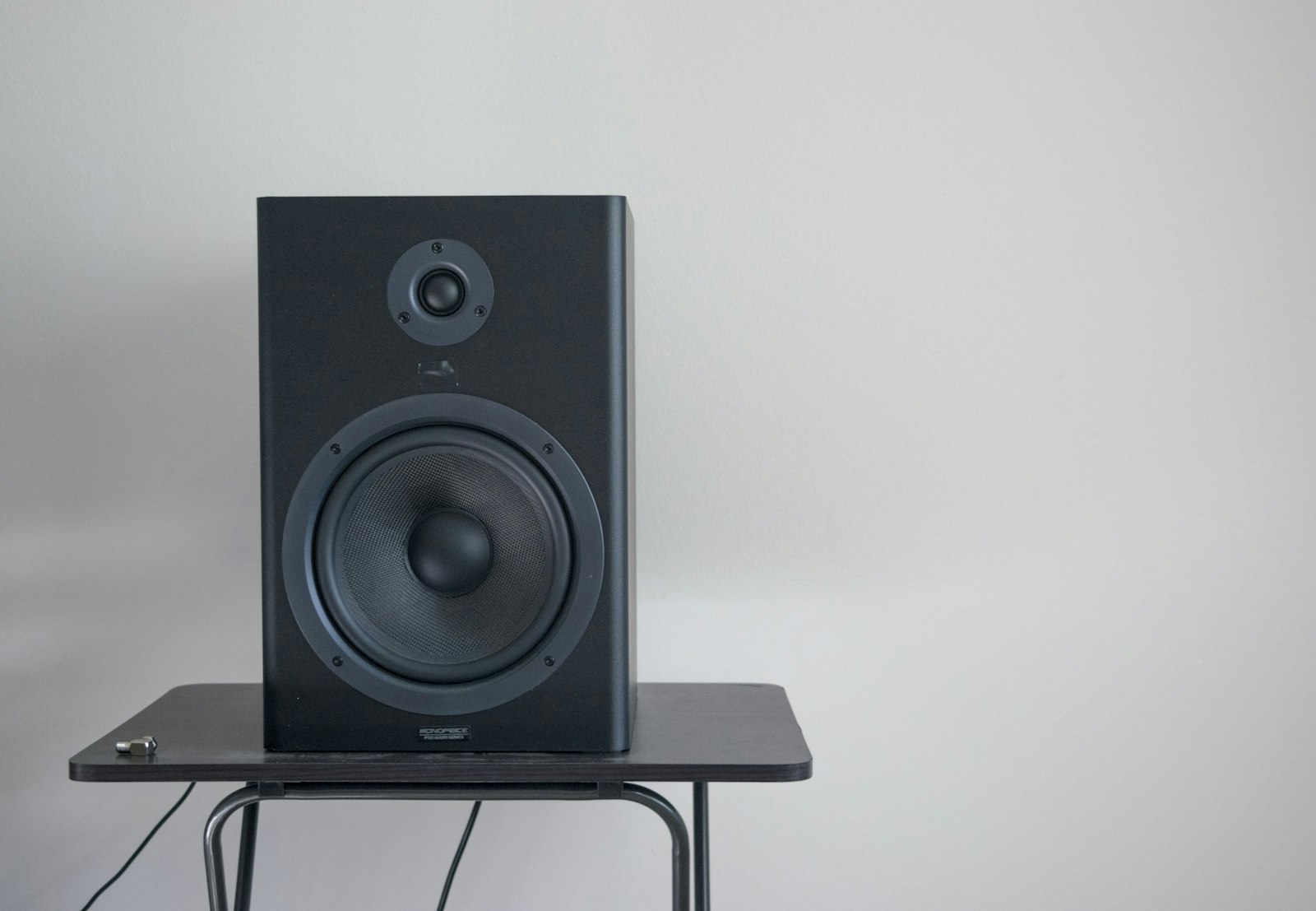
You spent the money on the monitors. The speakers everyone on the forum swears by are sitting on your desk, and your mixes still fall apart the second you play them in the car. So now you're staring at your bank account wondering whether the next upgrade should be even better speakers.
The short answer: Treat the room first, almost every time. A modest pair of monitors in an acoustically treated room will give you more honest, more translatable mixes than a flagship pair in an untreated box, because the room is the thing lying to you about what your mix actually sounds like.
Why the room beats the speakers
In a typical untreated bedroom or spare room, what you hear at the listening position is mostly the room, not the speakers. Sound leaves the monitor, bounces off the walls, floor, and ceiling, and arrives at your ears milliseconds later, layered on top of the direct signal.
That collision creates comb filtering, flutter echo, and standing waves. The result is a frequency response that swings 15 to 20 dB across the spectrum, with the worst chaos happening below 300 Hz. No monitor corrects for that, because the distortion happens in the air between the speaker and your head.
So when you reach for the low shelf to "fix" a muddy low end, you're often compensating for a room mode, not a real problem in the track. The mix sounds right in your room and nowhere else. Better monitors just render that lie in higher resolution.

Where to spend, in order
Treatment is dramatically cheaper than a monitor upgrade. You can make a meaningful dent in a small room for a few hundred dollars in materials. Here's the priority order:
- Bass traps in the corners first. Low frequencies pile up where walls meet. Thick, broadband porous absorbers — 4 inches of mineral wool or rigid fiberglass, straddling the corner with an air gap behind — are the single highest-impact move you can make.
- First reflection points next. Use the mirror trick: have a friend slide a mirror along the side wall while you sit at the mix position. Wherever you see a speaker reflected, put a 2-to-4-inch panel there. Do the same for the ceiling above your head.
- The back wall. It reflects sound straight back to your listening position, smearing the stereo image. Absorption or diffusion here locks things up considerably.
- Only then ask whether the monitors are actually the bottleneck. Usually they aren't.
A well-regarded pair of 5-inch monitors in the $300–$500 range is already more accurate than most rooms deserve. Treat the room first and those same speakers will sound like a different, better pair.
The foam myth
This is the one that costs people the most money for the least result.
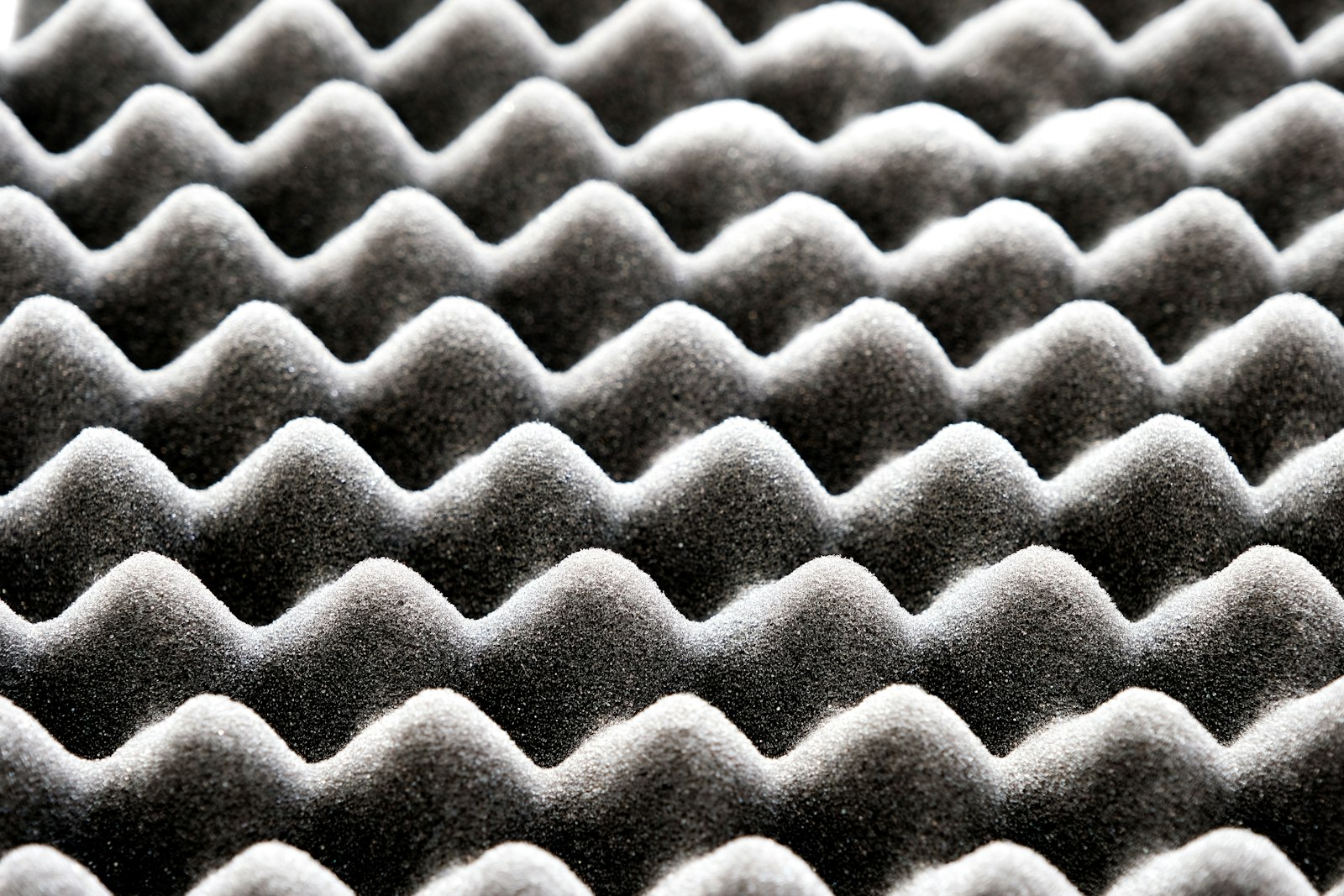
Myth: Those thin foam squares from Amazon will treat my room. They won't. Open-cell acoustic foam an inch or two thick only absorbs high frequencies, the stuff above roughly 1 to 2 kHz. It does almost nothing for the low-mid buildup and bass modes below 300 Hz, and those are exactly what cause the worst mixing decisions. Wall-to-wall foam gives you a dead, boxy-sounding room that still has all its bass problems intact.
If a material is thin and light, it cannot trap long, slow bass waves. Real bass control needs mass and depth — several inches of dense porous absorber, ideally with an air gap behind it. Foam treats the symptom you can already hear and ignores the disease you can't.
The other camps
Treatment-first is the consensus, but it's not the only defensible path. Smart engineers land in a few other places depending on their constraints.
The hybrid: light treatment plus room correction. Software like Sonarworks SoundID, ARC, or a calibrated REW-and-EQ chain measures your room and applies a corrective filter to flatten the frequency response at the mix position. This genuinely helps, and I run correction myself. But understand its limit: correction addresses the steady-state frequency response, not the time domain. It cannot remove a reflection or shorten a room mode's decay. A bass note that rings for 600 ms in a poorly trapped corner will still ring — the corrective EQ just pulls its level down slightly. Correction is a solid complement to bass traps, not a replacement for them.
The "I genuinely can't treat this" camp. Renters, dorm dwellers, anyone mixing in a shared space. If hanging panels isn't an option, stop trusting the room entirely and lean on references and headphones you know cold. Mix on a pair of cans you've mapped thoroughly — Sennheiser HD 600s, DT 880s, whatever you can describe blindfolded — and check constantly against two or three commercial references in your genre. Test every mix on cheap earbuds, a phone speaker, and the car. You're trading a flat room for a deeply memorized playback chain. It works, but it demands more discipline and more checking.
The "treat it but keep it reasonable" camp. You don't need to build an anechoic chamber. Over-deadening a small room with too much thin absorption and no diffusion creates its own fatiguing, unnatural sound. The goal is controlled, not dead.
What good actually sounds like
You'll notice the treatment is working before you measure anything. The low end gets defined rather than vague — you can suddenly hear where the kick ends and the bass begins. Reverb tails become legible. The center image locks in instead of smearing.
If you want data, grab a calibrated measurement mic and the free REW software and run a sweep. In an untreated small room you'll typically see a frequency response that looks like a mountain range, with low-frequency decay (RT60) well over half a second at 100 Hz and below. After corner traps and first-reflection panels, those swings narrow and you can reasonably target low-frequency decay around 0.3 seconds or less. That's the difference between guessing and knowing.
The honest exception
There's one case where monitors come first: when what you're working on is genuinely inadequate — a single computer speaker, a Bluetooth boombox, blown drivers, a "studio monitor" that's really a hi-fi speaker with a boosted smiley-face curve. You can't mix on a tool that's actively deceiving you regardless of how good the room is. Get to a competent, reasonably flat pair first, then stop and treat the space before chasing anything fancier.
For almost everyone else, the order is settled. Fix the air in the room before you upgrade the boxes pushing air into it. A few hundred dollars in mineral wool will teach you more about your mixes than the most expensive monitor you're considering, because it stops the room from lying — and an honest room is the one piece of gear every good mix actually depends on.