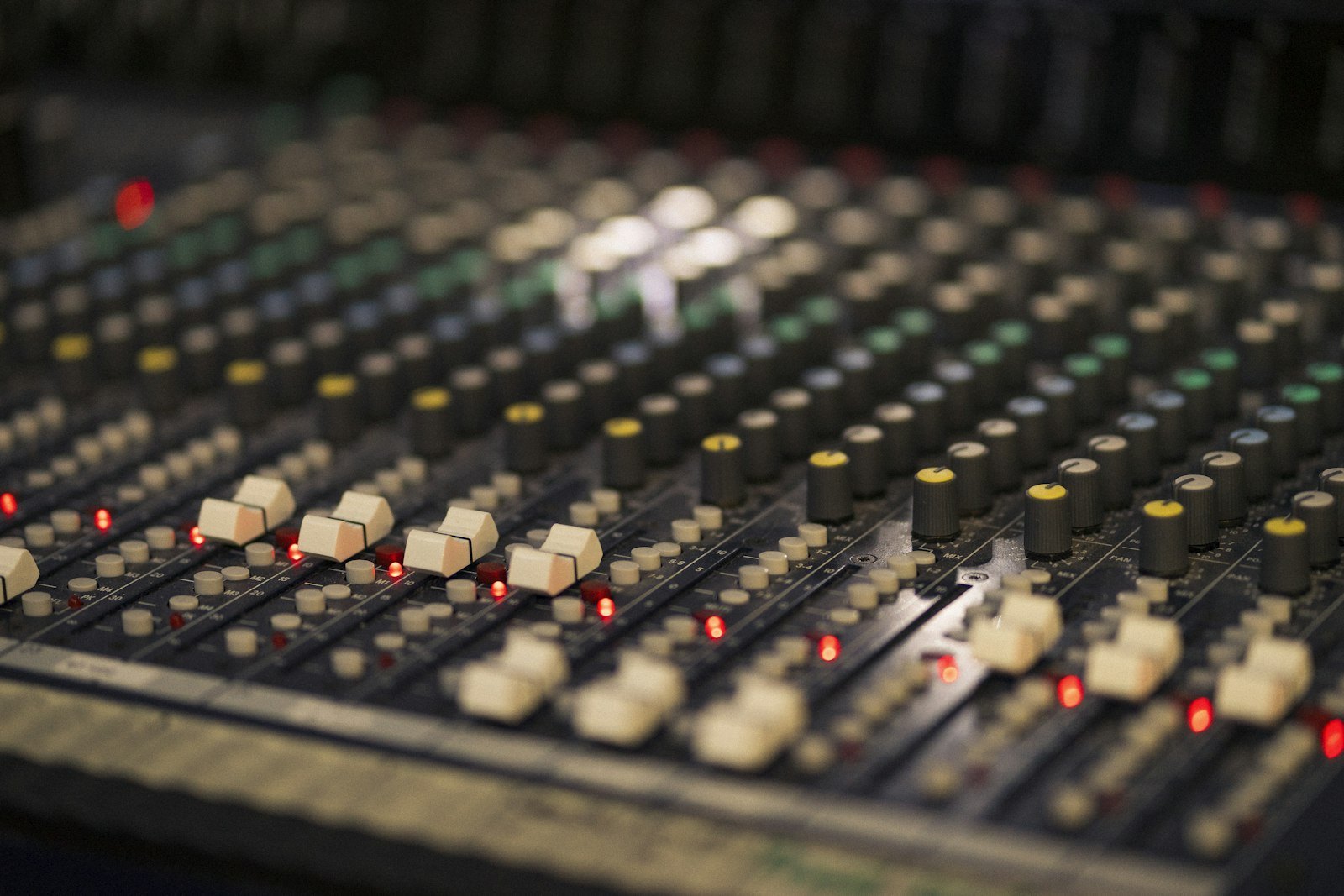
Play a Serban Ghenea mix loud and the first thing you notice is that nothing is fighting for space. Twenty tracks of pop maximalism, and every one of them is legible — the vocal sits right in front of you, the low end is tight, the top is silky, and the whole thing hits like a finished record without sounding crushed. Ghenea's credit list runs through decades of the biggest pop, country, and R&B records made — the kind of catalog that has made him one of the most-awarded mixers of his generation. So why is that sound so hard to reproduce at home?
The short version: Ghenea's records feel effortless because the effort is invisible — it lives in balances, dynamics control, and section-by-section automation, not in a secret piece of gear. He mixes entirely in the box with plugins anyone can buy, and the "sound" is judgment.
What his mixes feel like
There's a specific sensation to his work. The lead vocal sits forward and intimate, glued into the track rather than pasted on top of it. Density never turns to mud: even in a wall of synths, stacks, and drums, every element stays separated and readable.
It's also dynamic in a way loud pop usually isn't. The masters are loud and punchy — transients survive all the way to the end instead of getting flattened into a wall of noise. The stereo image breathes: verses feel narrower and more focused, then the chorus blooms wider and brighter, so the size and lift arrive exactly on cue with the emotion of the song. That's the part most people miss when they try to copy this sound. The bigness isn't constant. It's timed, section by section, to match what the song is doing emotionally at that exact moment.
How he actually works
Here's what surprises people: the process is almost aggressively unglamorous. Ghenea mixes entirely in the box in Pro Tools, on plugins anyone can buy — Waves, FabFilter, McDSP, iZotope, and others are all part of the toolkit — monitoring on ProAc nearfields. There's no mythical console doing the heavy lifting, no outboard rack full of unobtainable hardware. If you swapped his session onto your rig, the plugin list wouldn't surprise you at all.
It's also a two-person operation at MixStar in Virginia Beach: Ghenea plus engineer John Hanes, who has worked alongside him for years. Hanes preps sessions and handles the technical side of running Pro Tools, which frees Ghenea to spend his time making mix decisions rather than managing the DAW. That division of labor is a real part of the sound — attention is the scarce resource, and the workflow is built to protect it. It's a reminder that a lot of what reads as "talent" in a finished mix is actually a production system designed to remove friction from the one person whose ears matter most in that room.
A few consistently reported pillars of the method:
- He mixes into the master bus from the start. A light bus chain goes up early, so balances get made while he's already hearing something close to the finished tone and loudness — not mixing dry and bolting on a "finished" sound at the end.
- He automates for section contrast. Filtering down some low and high end in the verse, then opening back up for the chorus, is a documented part of how the arrangement breathes. That verse-narrow, chorus-bloom feeling is built one automation move at a time.
- Loudness comes from control, not brute limiting. Clean tracking, purposeful automation, and transparent compression get the level up, so the limiter at the end has less work to do. That's part of why the masters read loud without sounding squashed.
- The vocal path stays simple and forward. A channel strip, a compressor, tasteful de-essing, and delay/reverb sends ridden by hand per section — not a sprawling chain of a dozen plugins.

Ghenea has talked in interviews about not relying on a fixed set of tricks — treating each song as its own problem to solve rather than running everything through the same template. The recurring idea in how he describes his own process: serve the song first, and let the treatment follow from what the track actually needs. It's a discipline that's easy to state and genuinely hard to practice, because it means resisting the pull toward whatever chain worked on the last hit.
What you can steal
None of this requires his room. Most of it requires changing how you think about the process. Concrete moves for a bedroom setup:
- Song first, no default chain. Don't paste the same processing onto every track out of habit. Ask what this song actually needs, then do only that.
- Put a light master-bus chain up first and mix into it. Make your balances while you're already hearing close to the finished tone. You'll make different, better decisions than you would mixing dry.
- Get loudness from control, not crushing. Clean up the tracking, automate levels with intent, use transparent compression. Preserve the transients so your limiter does almost nothing.
- Automate for emotion. Narrow the verse and open the chorus. Try a mix-bus filter that rolls off lows and highs in the verse and lifts for the chorus. Ride your vocal delay and reverb sends by hand, section to section, so the space grows when the song does.
- Keep the vocal path simple and forward. Strip, compressor, de-ess, sends. Ride the sends. Stop there.
- Reference on real-world systems. Check your mix in a car, on earbuds, on a phone speaker — whatever people will actually use. If it doesn't translate there, it doesn't matter how it sounds on your monitors.
The myth worth killing
There's a persistent belief that a mix like this comes from a legendary SSL, a magic room, or a master-bus chain you couldn't afford to assemble.
He mixes entirely in the box, with plugins any bedroom producer can buy. There is no copyable "Serban chain" — the magic is balances, dynamics control, automation, and taste. The variable is judgment, not the gear.
Worth busting too: the assumption that huge, glued pop mixes must lean on parallel compression everywhere. That's not a universal rule of this style — plenty of records in this world are built on control at the source rather than a smashed parallel bus sitting underneath everything. If your instinct every time a mix needs more weight is to reach for a parallel bus, that's worth questioning. You do not need parallel compression to make a mix hit hard. You need clean signal, purposeful automation, and a clear sense of where the song is trying to go.
The real takeaway
What makes Ghenea worth studying isn't a setting you can dial in — it's a discipline you can adopt tonight. Serve the song. Hear something close to the finished picture from the first fader move. Earn your loudness through control instead of borrowing it from a limiter. Automate so the record breathes and lifts on cue. Then go listen somewhere that isn't your studio.
The gear was never the gap. The gap is how many small, patient, song-serving decisions you're willing to make when nobody's watching — and whether you trust your ears enough to make only the moves the song is actually asking for.