You finish the arrangement, every track sits where it should, and the mix still sounds like a photo of a band instead of a band. Thin, polite, a little dead. You reach for EQ and compression and it gets cleaner but no more alive — because cleaner was never the problem.
The short answer: Saturation is gentle, musical distortion that adds harmonics and softly rounds peaks, making a sound feel present, warm, and louder without touching the fader. Use it in small doses — glue on drums, weight on bass, life on sterile synths, polish on the bus.
What saturation actually does
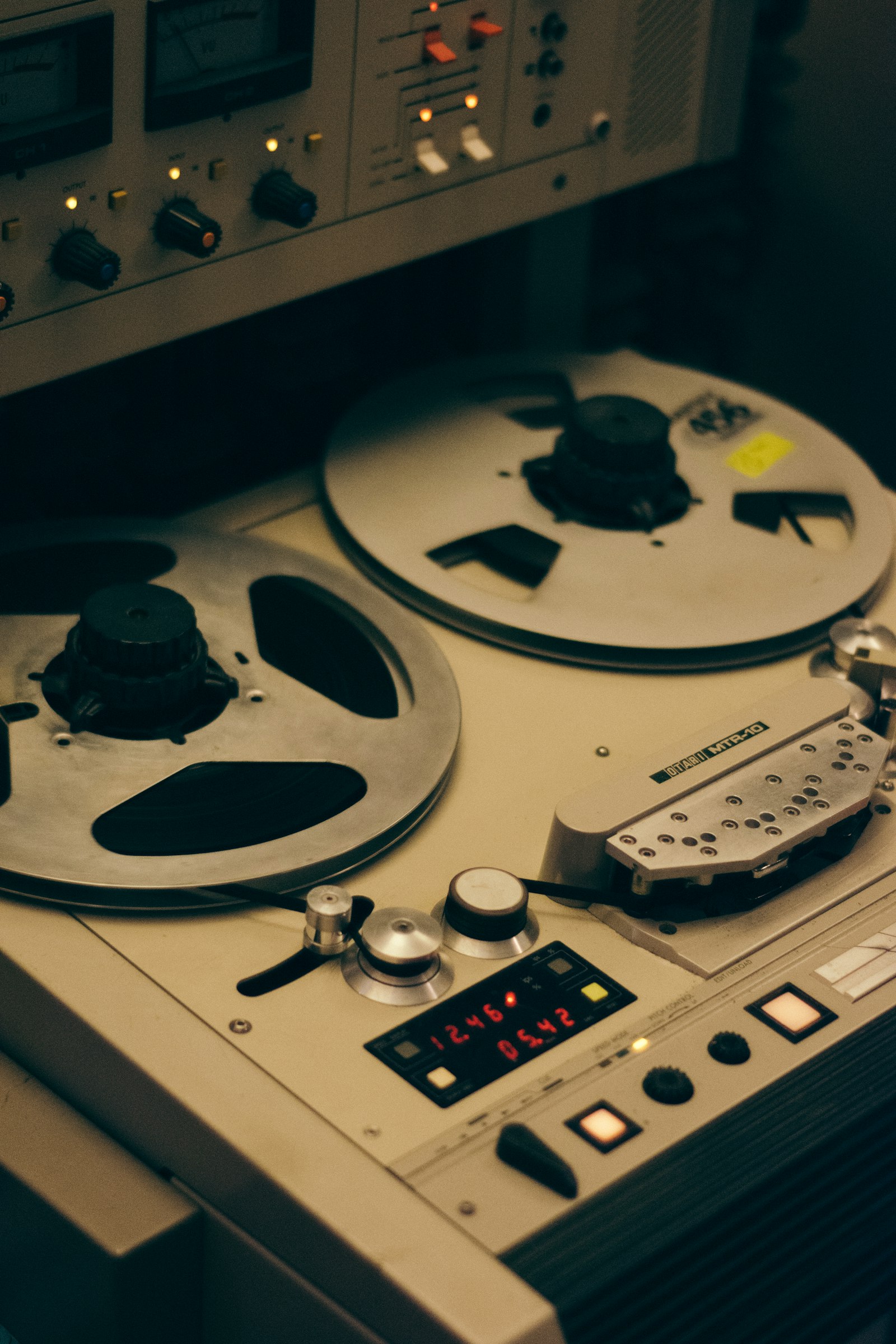
When you push a signal into any nonlinear circuit — a tube, a tape head, a transformer, an overdriven transistor — it stops reproducing the input faithfully and starts adding harmonics: new frequencies mathematically related to the original. A 100 Hz tone comes out with content at 200 Hz, 300 Hz, 400 Hz, and beyond.
Your ear reads those added harmonics as richness, body, and character. The same process also lightly compresses the top of the waveform, shaving transient peaks by a dB or so, which lets the average level sit higher. That's the "louder without raising the fader" effect — you're raising the RMS floor, not the peak ceiling.
So saturation does two jobs at once: it generates harmonic content that wasn't there, and it softens peaks. EQ only rebalances frequencies that already exist. Saturation creates new ones. That's why no amount of EQ can fake it.

When to reach for it
Think of saturation as seasoning — added after the structural mixing work is done. A few reliable places it earns its keep:
- Drum bus glue. A touch of tape or console-style saturation on the drum bus fuses kick, snare, and overheads into a single performance instead of layered samples. Start with the drive low enough that bypassing it is barely audible.
- Bass translation. Sub-heavy bass disappears on laptop speakers and phones. Saturating in the 80–250 Hz region generates harmonics up at 300 Hz–1.5 kHz, so the pitch of the bass survives even when the sub can't reproduce. This is the single biggest trick for small-speaker translation.
- Sterile synths and DI sources. Soft synths and direct-in guitars are often too perfect — no analog circuitry ever touched them. A little drive adds grit and air that makes them sound recorded rather than rendered.
- The mix bus. A whisper of saturation across the master — just enough that bypass is clearly audible — knits the whole mix and adds perceived loudness before your limiter ever sees the signal.
A practical rule: dial the drive up until you clearly hear breakup, then back off until it almost disappears. The sweet spot sits one notch past "I can't hear it doing anything."
The myth worth killing
Most producers file saturation next to distortion and fuzz — an effect for aggressive guitars, lo-fi crunch, and trap 808s. So they only reach for it when they want something to sound dirty, never on a clean vocal or a polished pop mix.
The misconception is that saturation is just distortion for aggressive or lo-fi sounds. In reality, most professional saturation lives below the threshold of obvious breakup — it's nearly inaudible until you bypass it and the sound suddenly goes flat, small, and lifeless. The clean records you love are usually drenched in it; you just can't hear it as distortion.
That's the whole game. Distortion announces itself. Saturation hides, and you only notice it was holding the sound up once it's gone.
Where people disagree
Saturation isn't one flavor, and engineers genuinely split on which circuit to use where. The disagreements mostly come down to which harmonics a given circuit emphasizes.
Even-harmonic camp (tube and tape). Tubes and tape generate predominantly even-order harmonics — octaves of the fundamental. The ear hears these as "warm," "full," and consonant, because an octave is already a musical relationship to the source note. This is the go-to for vocals, bass, and anything you want to sound bigger without sounding edgier.

Odd-harmonic camp (transistor and transformer). Solid-state clipping and transformers lean toward odd-order harmonics — fifths and their multiples — which the ear reads as "edge," "bite," and "presence." Reach here when a snare needs to cut, a guitar needs aggression, or a synth needs to push forward in a dense mix. Many engineers stack a touch of both.
Parallel saturation camp. Instead of saturating the full signal, blend a heavily driven copy underneath the dry track at around 20–40%. You get density and harmonic richness while the dry path keeps your transients sharp. This is standard on drums when full saturation would dull the attack.
The overt-effect camp. Some genres want it loud and obvious — lo-fi, distorted 808s in trap, rock guitars, industrial production. Here saturation stops being seasoning and becomes the flavor. There's nothing wrong with cranking it; just know you've crossed from mixing into sound design.
None of these approaches is wrong. The mistake is picking a plugin by its logo instead of by the harmonic character your source actually needs.
A starting recipe
Concrete numbers to get you started — a conservative pass that works on most material:
- Bass: parallel or insert saturation, drive low, focused on 80–250 Hz. Aim to add audible harmonic content up around 1 kHz without muddying the low end. Check on a phone speaker — the bass should still have pitch.
- Drum bus: tape or console emulation, drive set so peaks are caught by 1–2 dB, blended to where bypass is just noticeable.
- Lead vocal: gentle tube-style saturation, even harmonics, enough to add air and presence around 2–5 kHz without introducing harshness. Less than you think.
- Mix bus: the lightest possible touch — placed before your limiter. If you can clearly hear it as distortion on a full mix, pull it back.
Trust bypass over your meters. Toggle on and off — if the off state sounds smaller and more sterile, the saturation is doing its job.
The takeaway
Saturation is what separates a technically correct mix from one that sounds like it was made somewhere — through gear, into a room, onto tape. EQ and compression shape what's already there; saturation adds the harmonic life that makes a sound feel real and hold up on the small speakers most people actually listen on.
Start subtle, judge by bypass, and pick the circuit by its harmonic character rather than its name. Once you hear a flat mix come alive with a single dB of drive across the bus, you'll stop thinking of saturation as a distortion effect and start treating it as a finishing stage — which is exactly what it is.