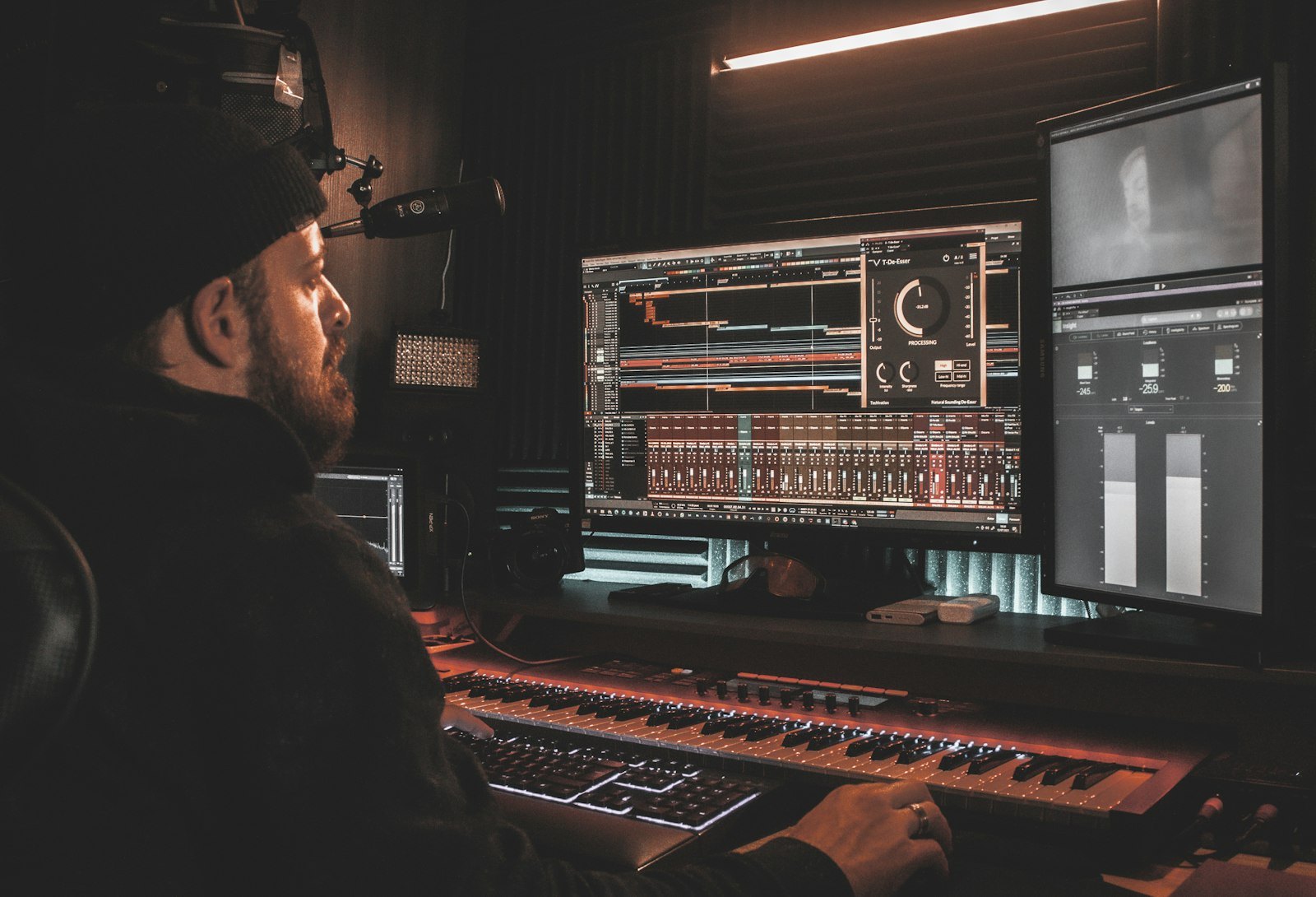
You bounce your mix, throw it on next to a song you love, and your stomach drops. Yours sounds thin, small, far away — like it's playing from the next room while theirs is right in your face. So you crank everything, pile on plugins, and somehow make it worse.
The short answer: Drop a commercially released song from your genre into the session, level-match it to your mix (pull the loud master down about 9 dB to start), and A/B in short 5-15 second bursts to calibrate tonal balance, low end, vocal level, dynamics, and width — not to copy the arrangement.
A reference track is a tuning fork, not a target. It tells you which direction you've drifted and how far. Used right, it's the fastest way to stop mixing in a vacuum.
Why your ears need a fixed point
Your ears adapt. Twenty minutes into a session your brain has normalized whatever is coming out of the speakers, so a dull mix starts to sound "fine" and a bright one stops being harsh. You lose the absolute reference and can only hear relative changes.
A reference track resets that. The moment you hear a finished, well-balanced record, your brain recalibrates and your mix's problems jump out — the boxy low-mids, the buried vocal, the snare that's somehow both loud and weak.
That only works if the comparison is fair. Which brings us to the one mistake that ruins the whole exercise.
Level-match or don't bother
Louder always sounds better for the first few seconds. It's a quirk of human hearing — equal-loudness contours mean more level reads as more bass, more clarity, more "finished." A commercial master typically lands between -8 and -14 LUFS integrated, depending on genre and platform target. Your unmastered mix is probably sitting around -18 to -22 LUFS. That gap is lying to you.
The myth: if your mix isn't as loud or full as the reference, it's weak. The reality: you're comparing an unmastered mix to a finished, limited, mastered record. Of course it's quieter and "smaller." Pull the reference's level down until it's perceptually matched to your mix, then listen. Half the things you were about to "fix" were never broken — they were just quieter.
Drop a gain plugin on the reference and pull it down about 9 dB. Trim by ear until they feel like the same loudness. Now the comparison means something.

The actual workflow
Here's the loop I run on basically every mix:
- Import the reference into the session on its own stereo track, routed past your mix bus processing so your compressor and limiter don't touch it.
- Gain it down ~9 dB and fine-tune by ear until it sits at your mix's loudness.
- A/B in short bursts. Five to fifteen seconds, same section both times — chorus against chorus, not your verse against their chorus. Long listens let your ears re-adapt and defeat the point.
- Listen for one thing at a time. First pass: low-end weight. Next pass: vocal level. Then brightness, then width, then dynamics. Trying to hear everything at once gets you nothing.
- Make the move, then re-check. Don't chase the reference into a perfect match — close the obvious gap and move on.
Pick your reference deliberately. Same genre, similar instrumentation, a record you'd be proud to land next to. A sparse acoustic ballad is a useless yardstick for a trap beat, and a brick-walled metal master will send your jazz mix in exactly the wrong direction.
What to compare — and what to ignore
Use the reference to calibrate the things that hold across a whole genre:
- Low-end weight — how much sub and bass, and where it sits relative to the kick
- Vocal level — how far up front the lead vocal sits in the balance
- Tonal balance — overall bright-vs-dark, and whether the low-mids are crowded
- Dynamics — how much the choruses lift, how much punch survives
- Stereo width — how wide the synths/guitars spread, how mono the low end stays
Do not use it to copy the arrangement, the song structure, the specific reverb, or the exact vocal effect. That's not referencing — that's tracing. The goal is a mix that holds its own next to that record, in your own voice.

The other camps
Plenty of working engineers run this differently, and they're not wrong.
The multi-reference crowd uses several tracks at once: one for the low end they're chasing, one for a vocal balance they love, one for the width they want. No single song nails every dimension, so they cherry-pick. More setup, but it stops you from inheriting one record's quirks wholesale.
The bookend camp only references at the very start and the very end of a mix. Their argument: constant A/B-ing makes you imitate instead of decide, so they listen hard up front to set targets, mix on their own for hours, then check at the end to catch drift. If you find referencing kills your instincts, try this.
The visual cross-checkers lean on a spectrum analyzer or a tool like Tonal Balance Control to compare curves objectively. This is useful when your room is untreated or you're on headphones you don't fully trust — your eyes can catch a 200 Hz buildup or a missing 10 kHz air that tired ears miss. Just don't mix to the graph. Two songs can measure nearly identically and feel completely different; the meter is a sanity check, not the verdict.
My take: ears lead, eyes confirm. The analyzer is good for catching gross problems — a 4 dB hump at 250 Hz, a low end that's all sub and no punch — but it can't tell you whether the vocal feels right. Use it to confirm what you already suspect, not to make the call for you.
A few things that will save you
Keep the reference gain-trimmed so you're matching tone, not chasing loudness — that's the whole point of the level-match step. Reference on more than one playback system if you can: the same two systems every time builds an aural memory you can actually trust. And resist the urge to A/B after every single move. Make three or four changes, then check. Constant flipping turns a useful tool into a nervous tic.
One last reframe. The reference isn't there to tell you your mix is bad. It's there to tell you exactly where and how much — which is the only information you can act on. "It sounds off" goes nowhere. "My low end is 3 dB heavy and my vocal is sitting 2 dB too low compared to this record" is a to-do list. That's the whole value: it turns a vague feeling into a specific, fixable gap.