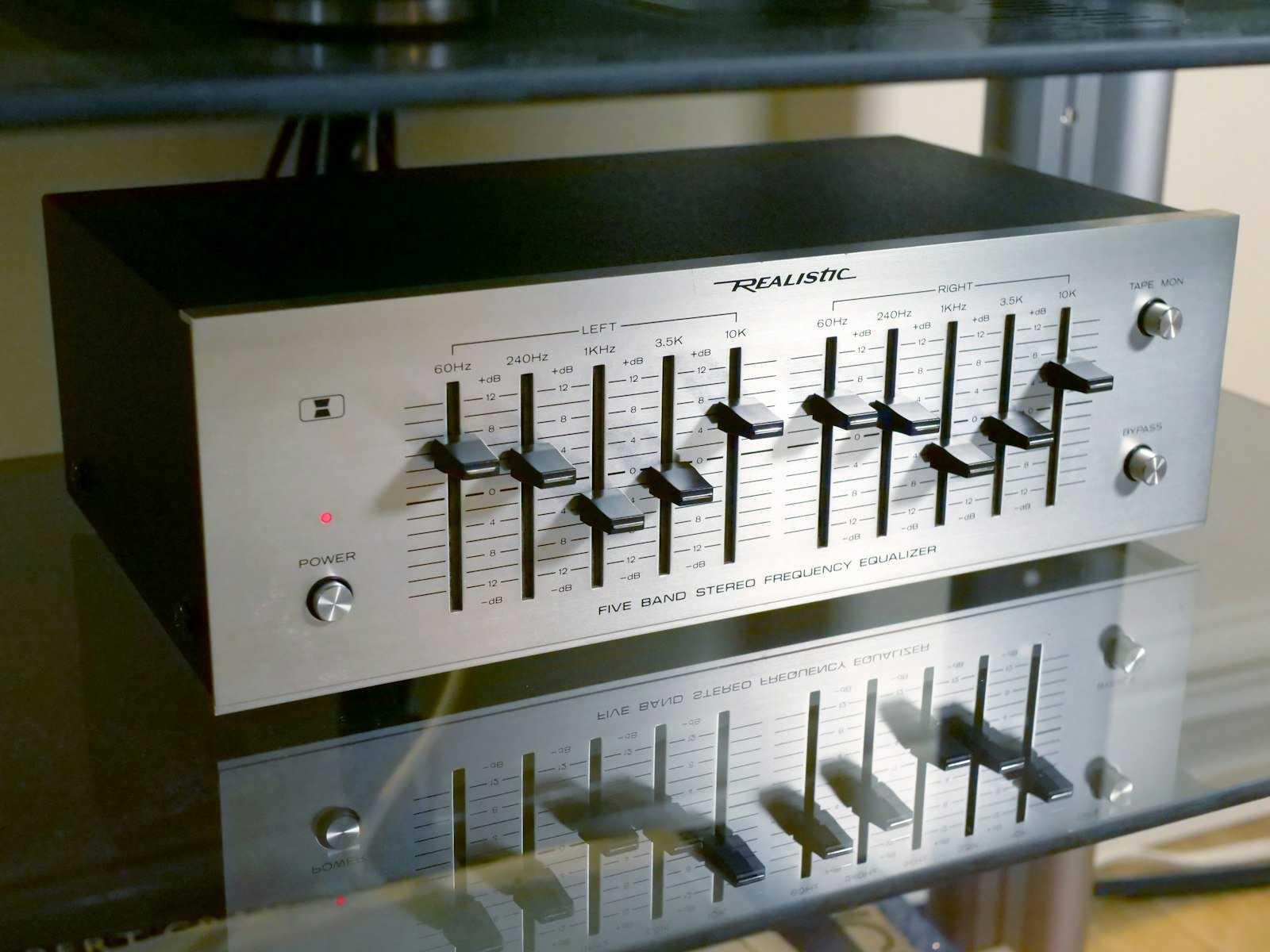
You've got a vocal that sounds boxy, a kick that's fighting the bass, and a guitar that's somehow both dull and harsh at the same time. You open an EQ and freeze: do you cut the bad stuff out, or boost the good stuff in? The internet has spent twenty years arguing about this. The argument is mostly noise.
The short answer: use both. Lead with subtractive cuts to fix problems, then add wide boosts for character. The durable rule of thumb is cut narrow, boost wide — cuts buy clarity cheaply, boosts add energy.
What the two moves actually do
Subtractive EQ removes frequencies. You're carving out the mud, the boxiness, the resonant ring making a snare sound like a tom. It's surgical: find the problem, take it out.
Additive EQ shapes tone and personality. You're pushing presence so a vocal cuts through, lifting air so an acoustic guitar shimmers, adding weight so a kick lands.
The mental model that makes this whole debate evaporate: cuts fix, boosts flavor. Fix before you flavor. There's no point boosting 5 kHz for presence on a vocal that still has a honky 500 Hz resonance smearing everything underneath. Solve the problem first, then shape the character.

The workflow that works on almost everything
This order runs on most sources. It's boring on purpose — boring is repeatable.
- High-pass first. Roll off sub-rumble below where the instrument lives: vocals around 80–100 Hz, electric guitar around 100–120 Hz, hi-hats around 300–400 Hz. This alone cleans up more mixes than any single boost.
- Hunt resonances with a narrow boost, then cut. Grab a narrow band (Q around 4–8), temporarily boost it 6–10 dB, and sweep until something jumps out ugly. That's your problem frequency. Pull it down 2–4 dB. Common culprits: mud at 200–400 Hz, boxiness at 400–600 Hz, harshness at 2–5 kHz.
- Boost wide for tone. Now reach for character. A gentle shelf or low-Q bell (Q around 0.7–1.2), 2–4 dB — body, presence, air, whatever's missing.
- Judge in the full mix. Always. A cut that sounds perfect soloed can hollow the track when everything's playing.
The cut-narrow/boost-wide rule isn't superstition. Narrow cuts target a specific resonance without disturbing neighboring frequencies. Wide boosts feel musical because real instruments don't have spiky frequency peaks — broad lifts mimic how good tone actually behaves.
The myth that won't die
Walk into any forum and someone will tell you, with total confidence, that real engineers only cut — that boosting is for amateurs.
The misconception is that you should never boost, only cut. It's wrong. Nearly every professional mix boosts constantly — presence on vocals, air on overheads, weight on the kick, a high shelf across the master bus. The actual principle is far narrower: reach for a problem-solving cut before an additive boost. "Cuts first" is a sequencing habit, not a prohibition.
This dogma comes from an era of noisier analog gear where boosting also raised the noise floor and could overload a channel strip. In a clean digital chain, a tasteful boost is a legitimate, professional move. Don't let a 1970s constraint run your 2026 session.
Where engineers actually disagree
There are real, legitimate camps here, and smart engineers land in different places.
The cuts-first purists treat subtractive EQ as a near-religion. The logic: cutting preserves headroom, avoids phase artifacts from heavy boosts, and forces you to diagnose the actual problem rather than paper over it with a lift. There's genuine discipline in this approach, and it makes you a better listener.
The "same destination" camp notes that tone is relational. Boosting lows and highs while cutting mids gets you to the same place as scooping the mids alone. Want a brighter vocal? You can boost 10 kHz or cut 250 Hz — your ear hears the balance, not the absolute level. So pick whichever move is simpler for the source in front of you.
The boost-to-taste crowd works the other way: find what's exciting and amplify it, fixing problems only when they intrude. On already well-recorded sources, this is fast and musical.

None of these are wrong. The mistake is treating any one of them as a law. The right answer is the one that gets the sound you want with the fewest, gentlest moves.
Starting numbers you can steal
Hypotheses before adjusting by ear — not presets:
- Lead vocal: high-pass at 90 Hz, narrow cut at 300–500 Hz if boxy, wide presence boost of 2–3 dB around 4–5 kHz, air shelf of 1–2 dB above 12 kHz.
- Kick: weight bump around 60–80 Hz, narrow cut around 300–400 Hz to kill the cardboard tone, click boost around 3–5 kHz so it reads on small speakers.
- Snare: body around 180–220 Hz, cut harshness around 1 kHz if it rings, crack boost around 5–7 kHz.
- Bass: narrow dip where it masks the kick (often 60–100 Hz), small boost around 700 Hz–1 kHz so it's audible on phones.
- Acoustic guitar: high-pass at 100 Hz, cut boom around 200 Hz, air shelf above 10 kHz.
Every one of these is a starting hypothesis. The source decides.
When to break the rule
The cut-narrow/boost-wide guideline holds maybe 90% of the time, and the exceptions are worth knowing. Sometimes a narrow boost is exactly right — a surgical 1–2 dB lift at a guitar's sweet resonant note, or a tight push at 4 kHz to pull a vocal forward in a dense chorus. Sometimes a wide cut makes sense — a broad low-mid scoop to de-mud a whole bus.
The principle underneath all of it is restraint. If you're regularly reaching for 8–10 dB of boost, the real fix is probably in the recording, the mic choice, or the arrangement — not the EQ. EQ is a scalpel, not a rescue tool.
Stop arguing cut versus boost. Cut to fix, boost to flavor, keep the moves small, and always judge in the full mix over the soloed channel. Do that consistently and your mixes get cleaner and more exciting at the same time — which was the whole point of an argument nobody needed to have.